

According to a report released earlier in Apple, App Store ‘ s weekly visits to 175 regions around the world now amount to 850 million, making it a prime target for outlaws with such a large number of users.
In a press release, Apple said: “As the digital environment continues to expand, outlaws are also changing their means of using fraudulent tactics to attack consumers and businesses. In order to meet these challenges, Apple continuously improves the multi-layered defence system to detect and deter malicious activity in combination with expert manual clearance and advanced machine learning techniques.”
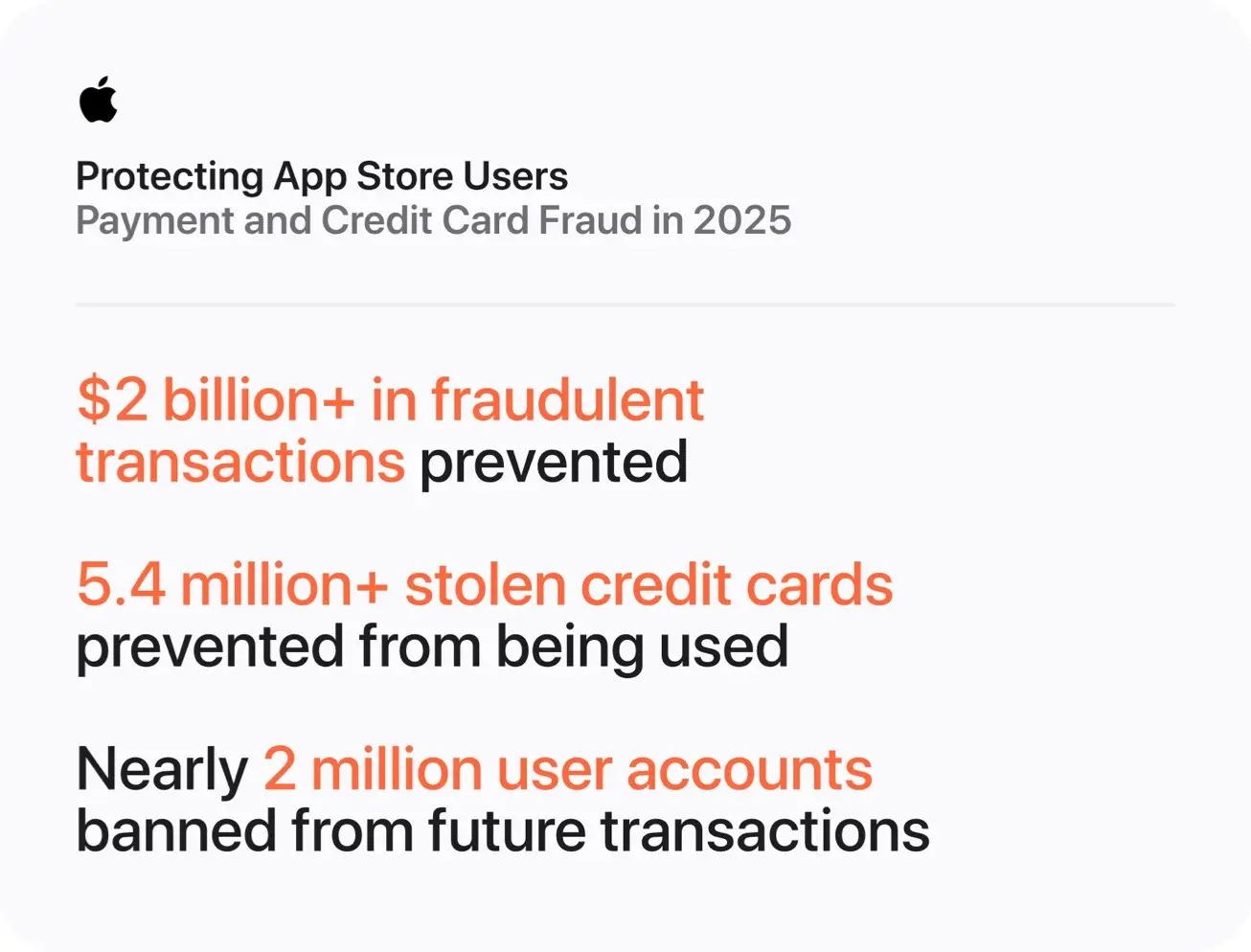
According to the security data published by Apple, in 2025 App Store prevented more than $2.2 billion in potential fraudulent transactions, which cumulatively amounted to $11.2 billion over the past six years. Apples have also prevented the misuse of more than 5.4 million stolen credit cards and have blocked over-front transactions for nearly 2 million accounts.
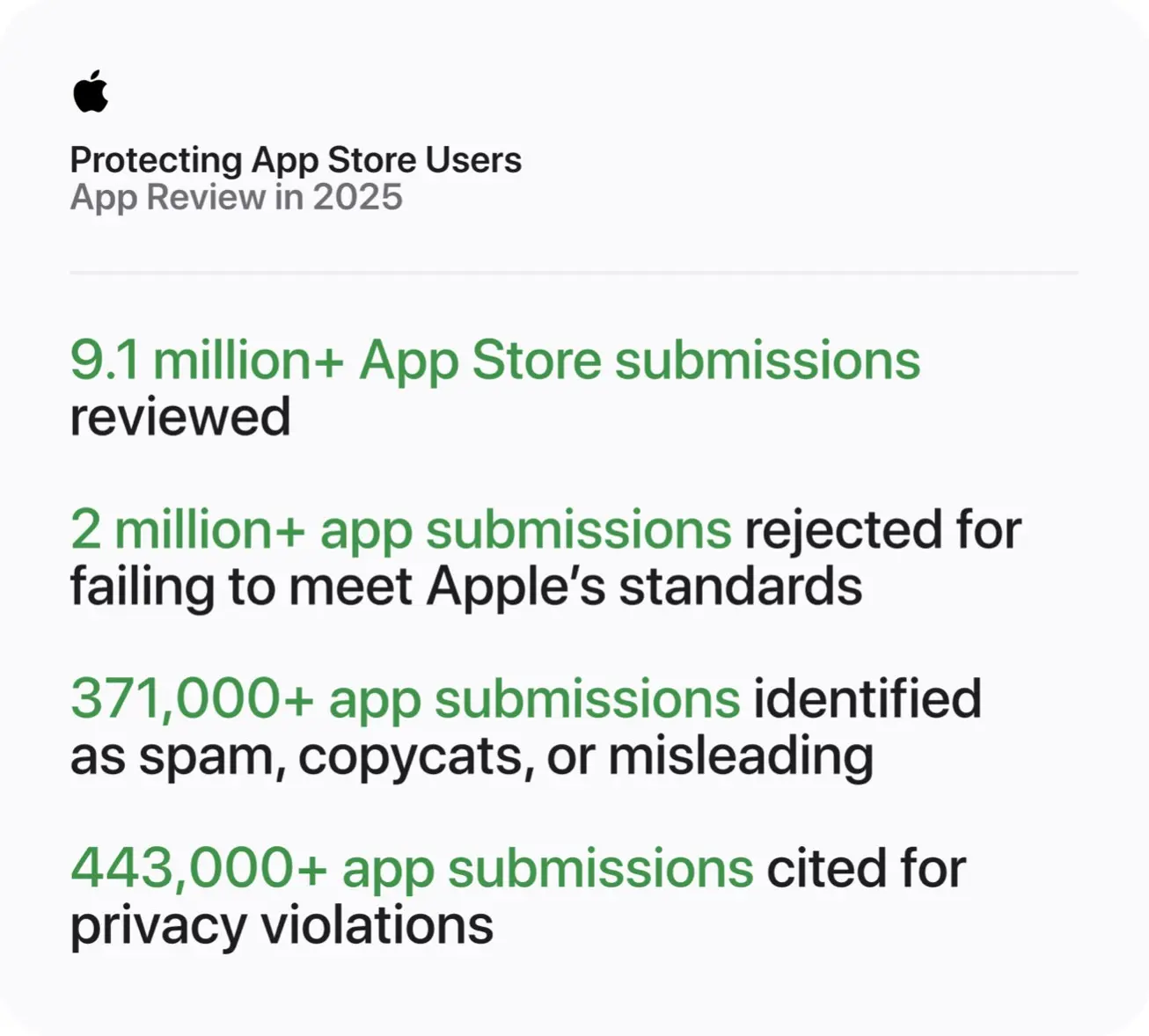
In 2025, a total of 9.1 million App Store applications were reviewed and more than 2 million problematic applications were rejected, of which more than 1.2 million were new applications and nearly 800,000 were updated versions of existing applications. Of these, more than 443,000 applications were rejected for breach of privacy and over 371,000 were marked as non-compliant for copying other applications, being labelled as garbage applications or misleading users. More than 22,000 were rejected for including hidden or unrecorded functions.
Apple stressed that the growing “fish marketing” strategy was worrying. Such applications are reviewed for financial fraud by seemingly harmless human and animal functions (e.g., puzzle games or calculators) and modified after approval. In 2025, apples had been installed for nearly 59,000 applications.
Apple also screened the pre-publication software through its TestFlight platform. Owing to fraud or security problems, apples prevented over 2.5 million submissions of software from entering the testing process for testers.
In response to the issue of account fraud, Apple noted that outlaws had started to deploy robotic networks to create virtual accounts, send spam to users, manipulate application queues and generate false comments. The Apple Trust and Security team has prevented many large-scale attempts to create fraudulent accounts last year.
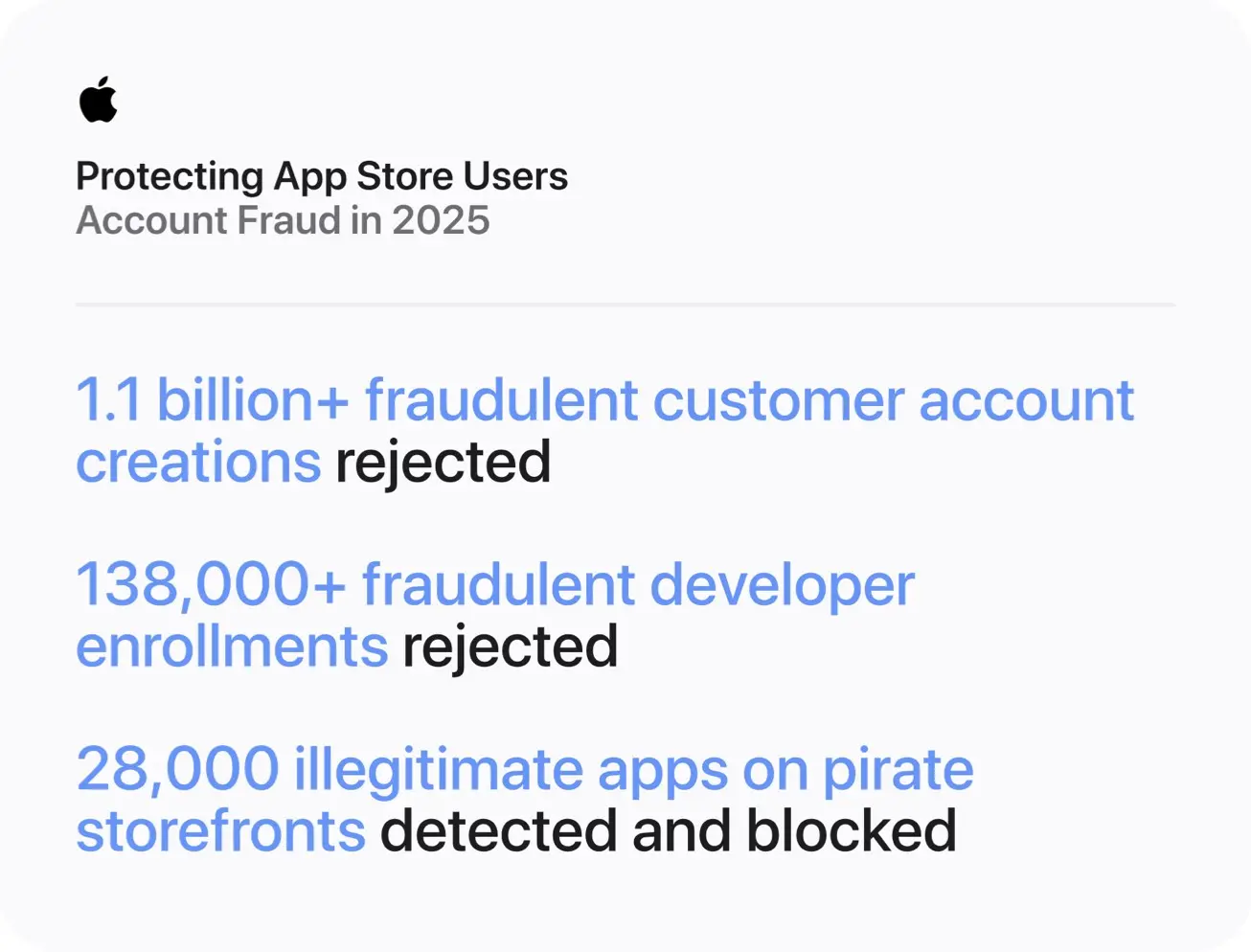
Apple rejected over 1.1 billion fraudulent account creation requests on App Store and blocked over 4.4 million accounts for fraud and abuse. In response to malicious application developers, apples closed 193,000 developers ‘ accounts and rejected 138,000 applications. Apples are also found outside their ecosystems and have been illegally used in 28,000 pirated shops. Apple stressed that in the last month alone, 2.9 million attempts to install or activate applications outside the App Store or approved alternative application shops were stopped.
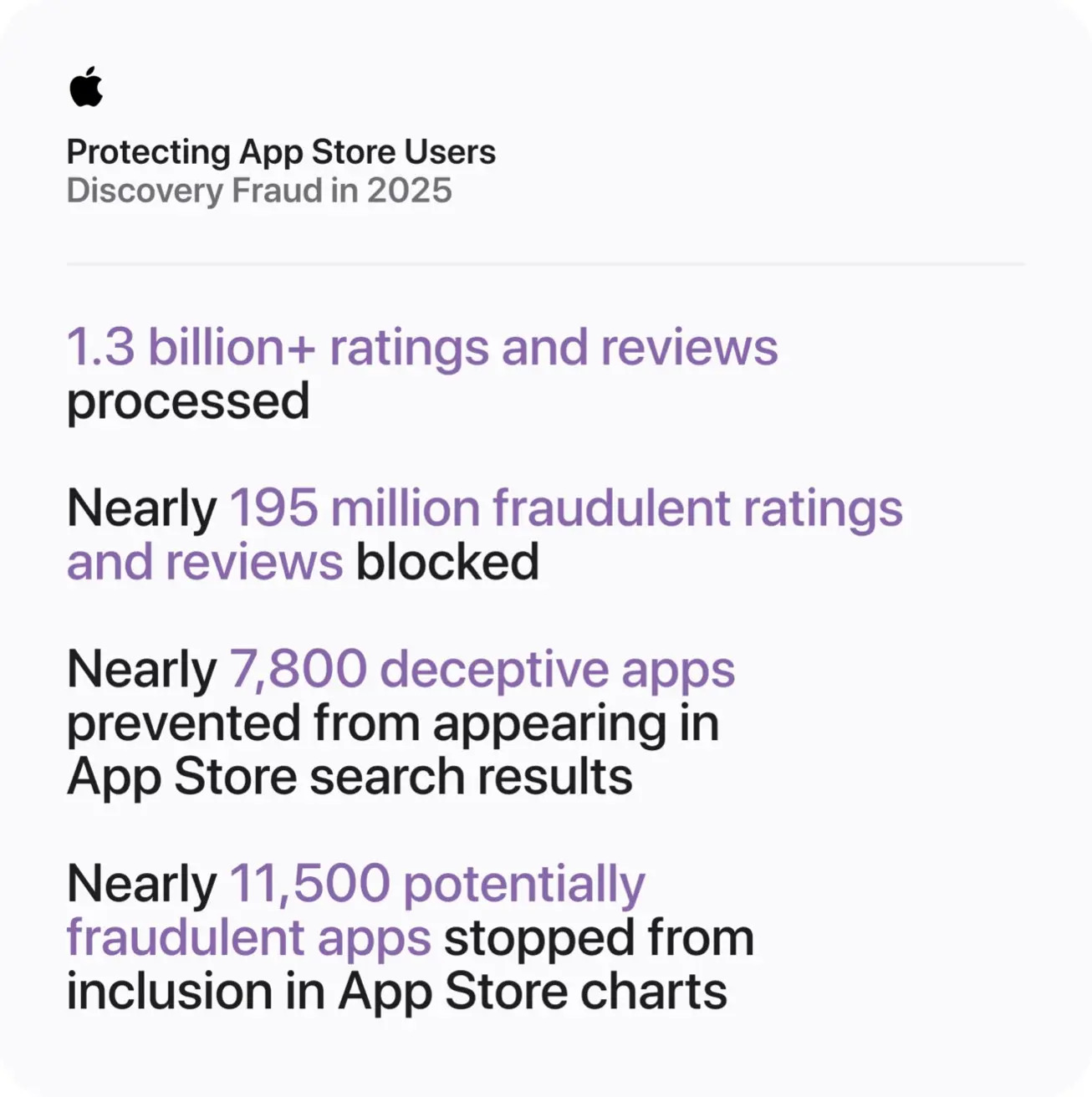
Malicious perpetrators were also active in the comment area of App Store, where false comments were issued to improve the application rating. Apple indicated that the company used AI and manual audit combinations to identify problematic comments. Of the 1.3 billion ratings and comments processed in 2025, apples shielded nearly 195 million and prevented some 7,800 fraudulent applications from being found.
All these figures illustrate large-scale initiatives to ensure security in applications such as App Store and Google Play. Nevertheless, in most cases, fraud and malicious activities appear to be increasing year by year, as shown by the Apple data shared in 2025 and 2024. Apple indicated that as fraud became more sophisticated, it would continue to invest more in its own defence measures.