
OpenAI introduced advertising on ChatGPT in January this year, and nine weeks later the price of ChatGPT has begun to fall. Advertisers are reported to have reduced the cost of reaching 1,000 users from $60 to a minimum of $25 when they go online, and continue to decline.
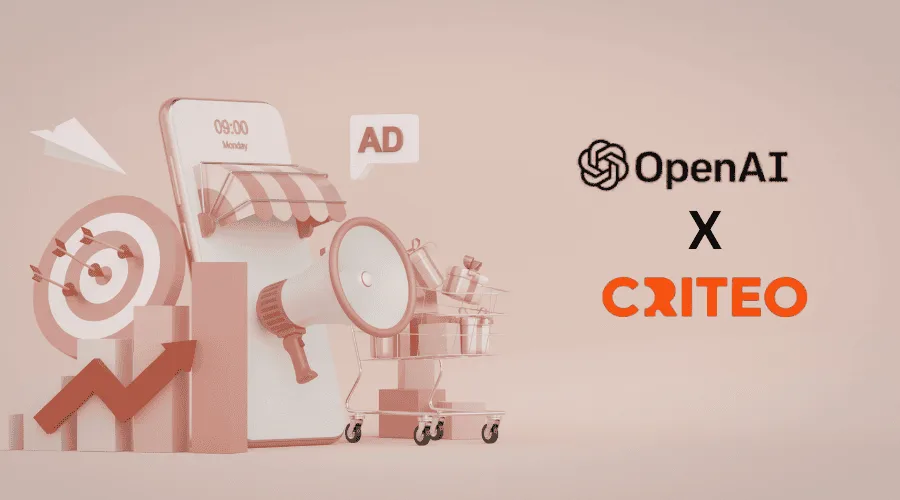
However, it is too early to conclude that, according to Digiday, the advertising company Jellyfish Media Activating the director of Jai Amin stated that while the benchmark price of $60 remained valid, the average price he saw was closer to $45, depending on the composition of the advertising resources. Other agencies have seen lower prices. An advertising executive who did not want to reveal his name indicated that the CPM (per 1,000 display costs) that he saw when he recently purchased the advertisement through Criteo (the Global Redirected Advertising Noose) ranged from $25 to $35. Advertising prices from other sources have fallen even more. Ad Age reported that the price was as low as $15, but it was not clear whether it had also been dropped through Criteo. Typically, such price fluctuations can be explained by competitive mechanisms. In short, prices depend on demand, and high demand drives high prices and low demand lower prices. But ChatGPT does not yet have a formal competitive mechanism. The more obvious signal is the entry threshold: the minimum expenditure required for participation has dropped from $250,000 to $50,000 on line, expanding the range of advertisers and, consequently, their willingness to pay. Ashley Fletcher, Chief Marketing Officer of Adthena, marketing intelligence agency, said: “It is felt that everything is being implemented gradually, preparing for a wider range of competitive channels to adapt to global proliferation”.

Even so, for a platform where most of the indicators are still in the pilot phase, USD 25 to USD 45 is still high. But this model is not new. When Netflix introduced its advertising level in 2022, the CPM was about $55 to $65. In one year, with the size of the inventory, the price dropped to between $20 and $30. But Netflix can afford to have the advantage OpenAI does not currently have, a clear value exchange model that users understand and trust. Users can view high-quality content, and advertising is the cost of being able to watch at cheaper subscriptions. By contrast, ChatGPT’s attraction is based in part on the user’s “no-intermediated” perception of its answer. AI recommends no product or service with no money transaction. Once advertising has been introduced, it will be difficult to maintain the “no-intermediated” perception, regardless of how OpenAI emphasizes that the paid advertising position is completely separate from the natural search results. Until OpenAI can demonstrate that the advertising of the dialogue interface can be of sufficient value to the user to allow the advertiser to see real value in the results of the search, the debate over the CPM remains somewhat theoretical. Robert Webster, founder of the AI Marketing Consulting Company TAU, said: “Google and Meta master the industry measure, which is the true moat, not the user interface. It is easy to measure by clicking, but it is difficult to measure by showing 60 dollars per thousand. Until such time as an independent body can verify the true value of ChatGPT’s presentation, the advertiser can only believe what OpenAI says.”
According to Gupta Media, Faacbook ‘ s average advertising price was $4.82, Instagram $7.63, Google Display $10.33 and TikTok $3.02. These are mature platforms with multi-year scale effects, good metrics and proven investment returns. Depending on the reference, it may be the leader, with the current average price of the advertisement at $39.19. Advertising agents have for a long time acquiesced in a high price for the British, as the advertising environment is sufficient to support the price. OpenAI made the same point, but it did not have enough time to prove it, as was the lead. The cost of each action (CPA) and the cost of each click (CPC) model, as well as the conversion tracking feature, are being developed, which will provide an inadequate attribution infrastructure for the current pilot. If these landfalls occur, the CCM controversy will become irrelevant. The real concern of advertisers is whether impact data can hold. There are few platforms that can develop as fast as OpenAI. In just nine weeks, OpenAI moved from a zero advertising business to a self-service advertising management platform, worked with Criteo to significantly lower the access threshold and appointed David Dugan (Adthena ‘ s Vice President of Business Operations) as the dedicated advertising director.
This rapid development reflects the pressures it faces. OpenAI will generate $2.5 billion in revenue this year, and Google and Meta are still on track, while their projections of $102 billion in advertising revenues in 2030 leave little room for slow construction. If OpenAI ‘ s advertising performance can be stable, then price-fixing strategies will naturally come to an end.