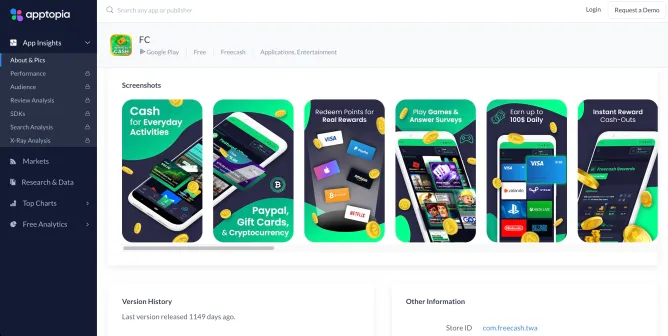
Apple recently banned a data collection application called Freecash. If you used to do TikTok, you probably saw Freecash. The application, which claims that only TikTok will be used to make money, has rapidly risen to the top of the major app stores in recent months, and once second in the top ranking of App Store in the United States.
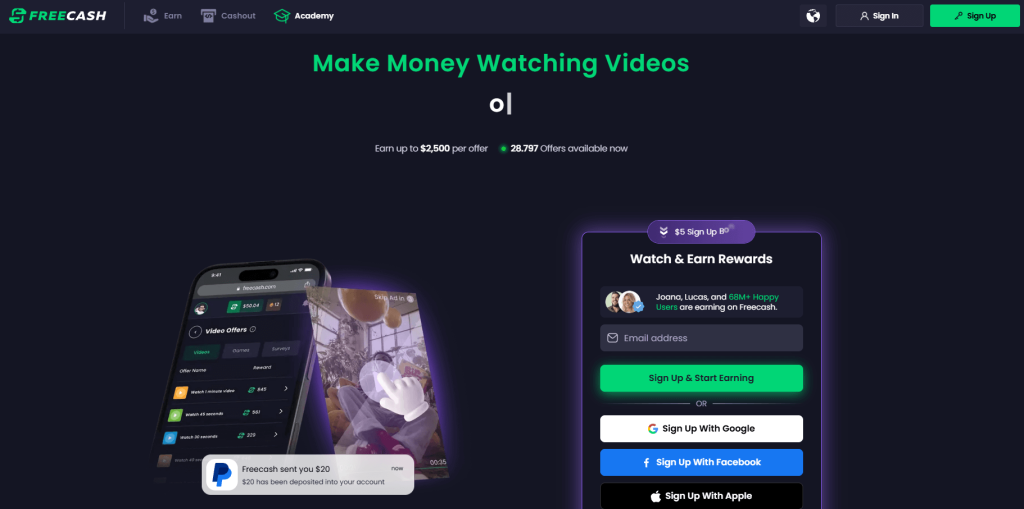
Presentation on Freecash
According to the cyber security company Malware bytes, Freecash would send money to users to play mobile games at the expense of collecting a large amount of sensitive data. According to a Malware bytes report, Freecash may collect user-specific, religious, sexual orientation, health and other biometric information, an application that is inherently a data broker and is designed to identify potential users willing to download and fill games for game developers. Games promoted on Freecash include Monopoly Go and Disney Solitaire. An article in Wireline magazine this January revealed that Freecash used fraudulent marketing techniques to induce users to spend money in the game. TikTok withdrew part of the Freecash advertisement in violation of Freecash ‘ s financial false reporting requirements. At that time, Freecash denied participation, stating that the advertisements were generated by third parties and not by itself. TechCrunch reported that apples have now removed Freecash from App Store. To date, the application is still on the Google Play store.
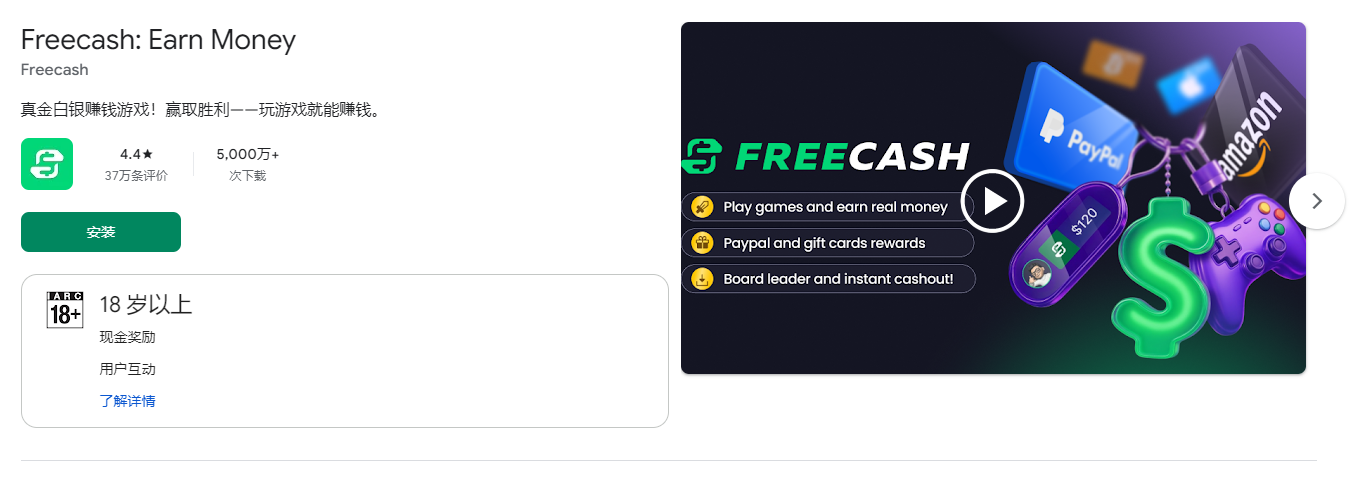
When contacted, Almedia, the Freecash parent company, based in Germany, denied allegations that its platform had been artificially led or used fraudulent marketing techniques. “Our application is fully in line with the policies of App Store and Google Play, as evidenced by the fact that they are on board and regularly reviewed through the platform. We do not comment on the internal product strategy for the placement of specific applications. “How social media advertisements and other partnerships are used in such applications as Freecash, which eventually tops the app store, remains a mystery. According to the Market Research Company Appfigures, Freecash ‘ s downloads surged from 876,000 in October 2025 to 5.5 million in January 2026, raising it to second place in the United States of America ‘ s App Store. Thanks to natural flows and other marketing instruments, Freecash has remained almost daily at the top five since 8 January. Appfigures states that on Google Play, the application reached seventh in total.
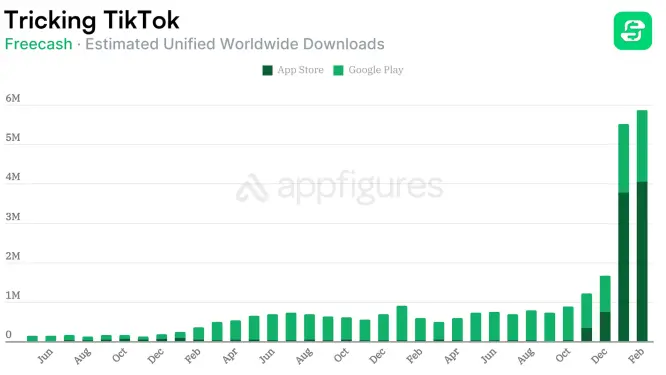
TechCrunch states that Appfigures data indicate that Freecash ‘ s downloads peaked in February at close to 6 million times, but have since declined. It is currently estimated that the application will be installed approximately 3 million times in April. However, Freecash’s tactics go far beyond misleading TikTok ads, possible false ratings, suspicious pro-Google reverse links and the apparent use of robotics to channel applications. It was created under the accounts of two different developers before Freecash quickly reached the Apple and Google Applications Shop. Third-party data from the market intelligence provider Appfigures show that the German parent company Almedia GmbH, behind Freecash, first submitted Freecash to Apple Store on 24 March 2024, but was removed on 13 June 2024 about two months later. According to Appfigures, the version was downloaded an estimated 695 000 times before the lower shelf. Several months later, a long-standing application developed by Cyprus company 256 Reward Ltd was renamed “Freecash” and, according to third party data, updates were submitted under the application ID. It is not clear whether Almedia acquired the Cypriot developer (formerly Rewards) or simply the developer’s account. Rewards appears no longer to have a functioning website or social media account, and the team has since moved to another new company called Pushed.
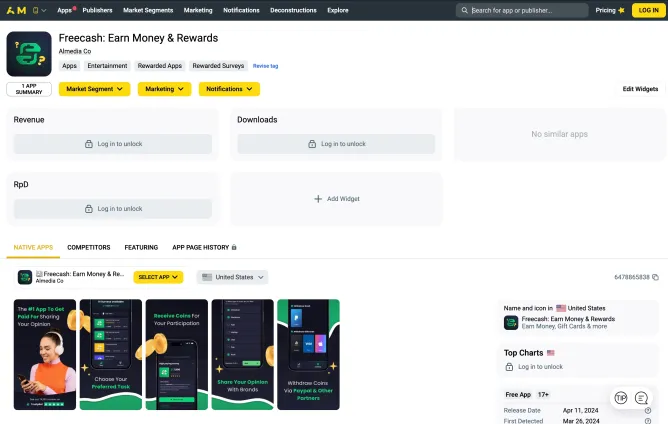
Almedia’s re-entry into App Store through another developer’s account may be a means of circumventing the initial ban on Freecash applications. The use of another developer to re-enter App Store after the ban was a common but irregular means. A Washington Post report on fraudulent applications of ecosystems points to this trend, highlighting the fact that some fraudulent applications would fall from the application store and then re-emerge with different developers ‘ accounts. This strategy was also documented in other independent investigations, where the owners of fraudulent applications were reported to operate multiple accounts. It is not clear whether Almedia adopted a similar approach when approving its Freecash application, but it is clear that the Rewards application, renamed Freecash for only five months, quickly reached the Apple and Google Shop. The spokesperson for Almedia did not indicate whether his original application had been banned for policy violations. Apple’s App Store Guide prohibits the application of such means as circumventing the ban to attempt to deceive its App audit system. Articles 3.1.2 (a) and 2.3.1 of the App Store Audit Guide prohibit the deception of users, the use of bait marketing strategies and the misleading promotion of applications. In addition, the Apple Developer Scheme Licensing Agreement provides that developers may not engage in illegal, unfair, misleading, fraudulent, improper or dishonest acts or commercial acts related to their application. According to Apple, this includes bait switch pricing, misleading consumers, fraudulent business practices or unfair competition against other developers. Almedia may have taken similar measures at Google Play. According to the Appfigures data, the company ‘ s original application was removed in January 2024. The current Freecash application is listed in the different developers ID. Google indicated that an investigation was under way.